Biomarkers and Asthma Treatment: Experience at the Hospital Italiano de Córdoba
DOI:
https://doi.org/10.56538/ramr.LIWW1587Keywords:
asthma, biomarkers, biologic therapy, ashtma control, inhalation devicesAbstract
Objective: To describe the clinical, inflammatory, functional, and therapeutic characteristics of asthma patients treated at a high-complexity center in Córdoba, Argentina.
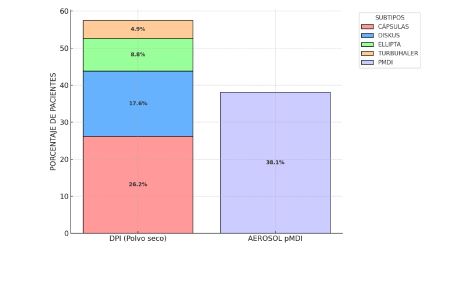
Materials and Methods: Observational, descriptive, cross-sectional study including 350 adult patients with a confirmed diagnosis of asthma according to GEMA 5.4 and GINA 2025 guidelines. Sociodemographic variables, body mass index, smoking status, inflammatory biomarkers (peripheral blood eosinophils and total serum immunoglobulin E), clinical control assessed by a validated asthma control questionnaire, treatment adherence assessed by a validated inhaler adherence questionnaire, lung function, and treatment characteristics, including inhaler devices and biologic therapies, were analyzed.
Results: Seventy-six percent of patients were women, with a predominance of individuals older than 60 years. Seventy-eight percent were overweight or obese and 36.4% were classified as severe asthma. Thirty-four percent showed elevated eosinophil counts (≥300 cells/μL) and 61% elevated total serum immunoglobulin E levels (≥150 IU/mL). Fifty-three percent had well-controlled asthma and 57% showed good treatment adherence. An obstructive pattern was observed in 47% of patients. Ten percent were receiving biologic therapies, mainly mepolizumab and omalizumab.
Conclusions: This population shows a high burden of type 2 inflammation, a significant prevalence of severe asthma, and suboptimal disease control. The integration of inflammatory biomarkers, structured clinical assessment, and appropriate inhaler device selection is essential to optimize therapeutic strategies, particularly in candidates for targeted biologic therapies.