Patient Self-Inflicted Lung Injury: Pathophysiology, Monitoring of Respiratory Effort, and Individualized Ventilatory Strategy
DOI:
https://doi.org/10.56538/ramr.NEIW7158Keywords:
Mechanical Ventilation, Ventilator-Induced Lung Injury, Work Of Breathing, Respiratory Distress Syndrome, Monitoring PhysiologicAbstract
Patient self-inflicted lung injury (P-SILI) is a particularly relevant phenomenon in patients with acute respiratory failure (ARF) undergoing invasive mechanical ventilation (IMV). In this context, excessive spontaneous respiratory effort may generate or worsen pre-existing lung injury through mechanisms that operate even when programmed ventilatory parameters remain within an apparently protective range.
Throughout the literature, multiple variables have been proposed for monitoring respiratory effort and pulmonary mechanics. Direct methods, such as esophageal pressure and diaphragmatic electrical activity, allow more accurate quantification of patient effort, whereas indirect methods, such as P0.1 or diaphragmatic ultrasound, estimate its magnitude through surrogate variables. Although there is no consensus regarding the best monitoring strategy, understanding the importance of its assessment is crucial to avoid errors in the individualization of ventilatory support.
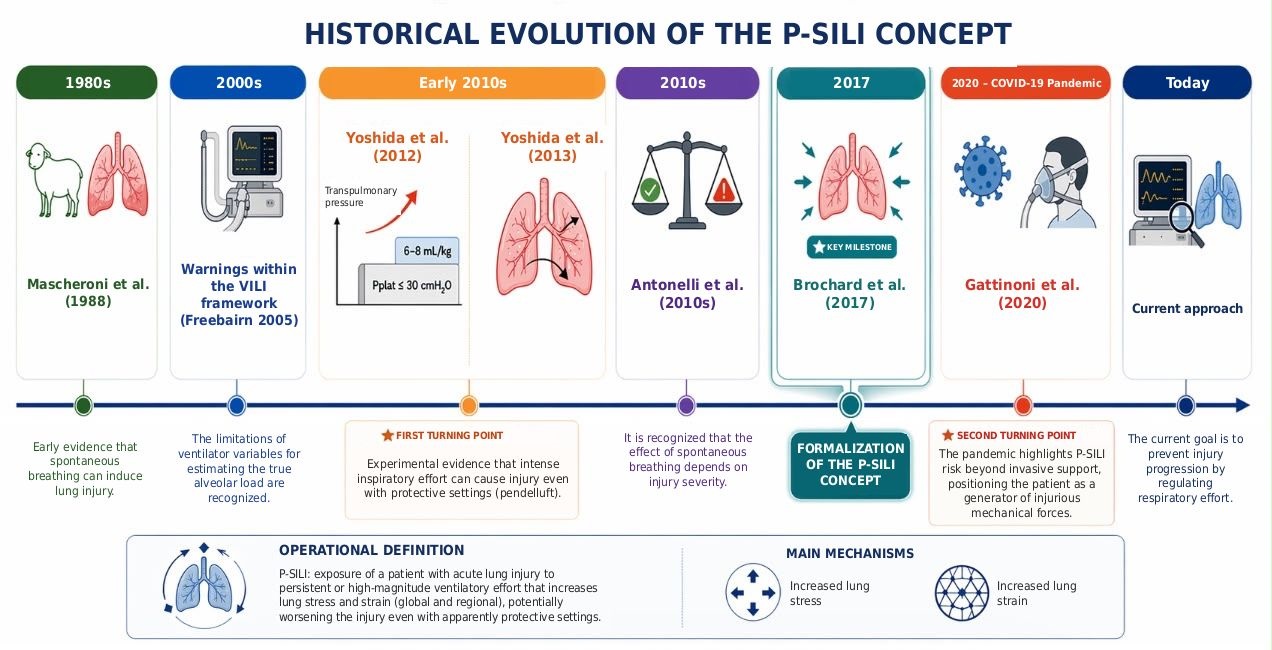
This narrative review develops the concept of P-SILI by addressing its historical evolution, its pathophysiological basis, and the impact of different ventilatory modes on its prevention or exacerbation. In addition, it examines the association between respiratory effort variables and relevant clinical outcomes—mortality, length of stay in the intensive care unit (ICU), and duration of mechanical ventilation (MV)—in patients with acute respiratory failure undergoing IMV. Finally, it provides an integrative synthesis aimed at supporting a practical approach to individualized monitoring and ventilatory adjustment.