Guillain-Barré Syndrome and Tuberculosis: a Rare Association. Case Report
DOI:
https://doi.org/10.56538/ramr.ILEO8775Keywords:
Tuberculosis, Guillain Barré, MeningitisAbstract
Background: Guillain-Barré syndrome (GBS) is an acute inflammatory polyradiculoneu ropathy of immunological origin, manifesting as progressive weakness, areflexia, and autonomic or respiratory compromise. It is classically linked to Campylobacter jejuni and viral infections, although reports have emerged suggesting an association with tuberculosis.
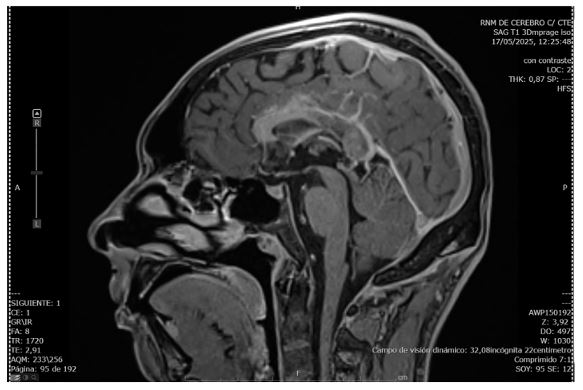
Case report: We present the case of a 25-year-old male patient, incarcerated, who was admitted with paraparesis, areflexia, fever, and weight loss. Albuminocytological dissociation was documented in cerebrospinal fluid, and treatment with gamma globulin was initiated based on a presumption of GBS. Pulmonary tuberculosis was suspected based on CT findings. The patient’s neurological condition deteriorated, and a brain MRI was performed, consistent with meningitis. Empirical treatment with antituberculosis drugs was initiated due to a high probability of pulmonary and meningeal tuberculosis, which was subsequently confirmed by PCR in CSF and sputum smear microscopy in tracheal aspirate samples. The patient completed the antituberculosis treatment. Currently, with persistent neurological sequelae.
Conclusions: Studies suggest that Mycobacterium tuberculosis could induce an autoimmune response through molecular mimicry or systemic inflammatory activation.