EVOLUTION OF PCO2 AFTER HYPERCAPNIC RESPIRATORY FAULIRE IN PATIENTS WITH COPD
DOI:
https://doi.org/10.56538/ramr.XEYY7874Keywords:
CPOD, Hypercapnia, Ventilatory failureAbstract
Introduction: Chronic obstructive pulmonary disease (COPD) is one of the top three leading causes of morbidity and mortality worldwide. During the disease course, a subset of patients develops episodes of acute hypercapnic ventilatory failure, characterized by sustained elevation of arterial partial pressure of carbon dioxide (pCO₂). Objectives: To analyze the evolution of pCO₂ in COPD patients during the three months following hospitalization for hypercapnic ventilatory failure, exploring the clinical and functional characteristics associated with persistent versus reversible hypercapnia.
Materials and Methods: A prospective, multicenter, observational study was conducted, including 27 patients hospitalized in six healthcare centers in Argentina between March 2023 and August 2024. Patients were followed with clinical, functional, and arterial blood gas evaluations at 30, 60, and 90 days after hospital discharge.
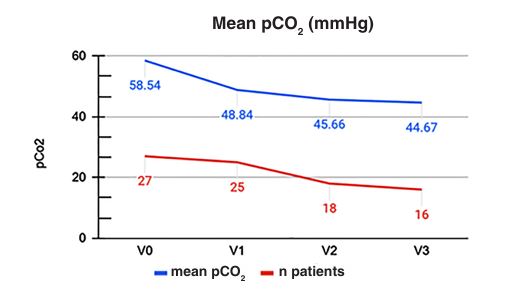
Results: The mean pCO₂was 58.4 mmHg at discharge, 48.84 mmHg at 30 days, 45.66 mmHg at 60 days, and 44.67 mmHg at 90 days. Persistent hypercapnia was observed in 43.8% of patients.
Conclusions: The persistence of hypercapnia after hospitalization identifies a clinically more complex subgroup, with a higher risk of poor outcomes. Structured pCO₂ monitoring enables targeted interventions and helps personalize the follow-up of patients with severe COPD