COMPLICATIONS IN THE USE OF THE MONTGOMERY T-TUBE IN A MECHANICAL VENTILATION WEANING AND REHABILITATION CENTER
DOI:
https://doi.org/10.56538/ramr.XCEW2085Keywords:
tracheal prostheses, tracheal stenosis, tracheostomy, respiratory rehabilitation, postoperative complicationsAbstract
Background: The Montgomery-type prosthesis, or Montgomery T-tube (MTG), is a device used for the treatment of various tracheal pathologies, such as stenosis and granulomas, as well as for postoperative management following tracheal surgery. Despite its widespread use, there is limited national evidence regarding its complications in respiratory rehabilitation settings. The objective of this study was to describe the complications associated with the use of MTG in a Mechanical Ventilation Weaning and Rehabilitation Center (MVWRC), including the reasons for its placement, postoperative medical indications, discharge status, and survival.
Materials and methods: An observational, cross-sectional, and retrospective study was conducted, including patients aged ≥18 years admitted to the MVWRC from 2015 to 2023, who received or were indicated for MTG prosthesis placement during hospitalization. We analyzed clinical and demographic variables, postoperative indications, associated complications, duration of use, and patient discharge destinations.
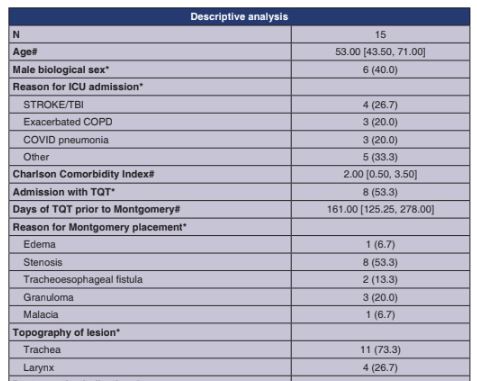
Results: Fifteen patients were included, with a mean age of 53 years. The most frequent indication for placement was tracheal stenosis (53.3%). 93.3% of patients experienced
at least one complication, mainly increased secretions and the need for aspiration. One third of the patients required emergency removal of the MTG. The median duration of
use was 104.5 days, and survival rate at discharge was 80%.
Conclusion: Most patients with a MTG experienced complications during hospitalization, with emergency removal being the most frequent intervention. Standardization of postoperative care protocols could reduce complications and optimize clinical outcomes.